The start of 2025 brings some important updates to the UK’s VAT regulations that every business owner and finance professional should understand. From a continued standard VAT rate of 20%, to updates involving the VAT treatment of private school fees and changes to the VAT registration threshold, it’s essential to stay compliant and plan accordingly. This article provides a detailed overview of the current VAT rates in the UK for 2025, outlines the types of goods and services covered under each VAT category, and explains the compliance requirements for businesses operating within the UK—and trading with the EU.
Overview of UK VAT Rates in 2025
As of January 2025, the UK continues to apply three primary VAT rates:
- Standard Rate: 20% – Applied to most goods and services unless specifically reduced or zero-rated.
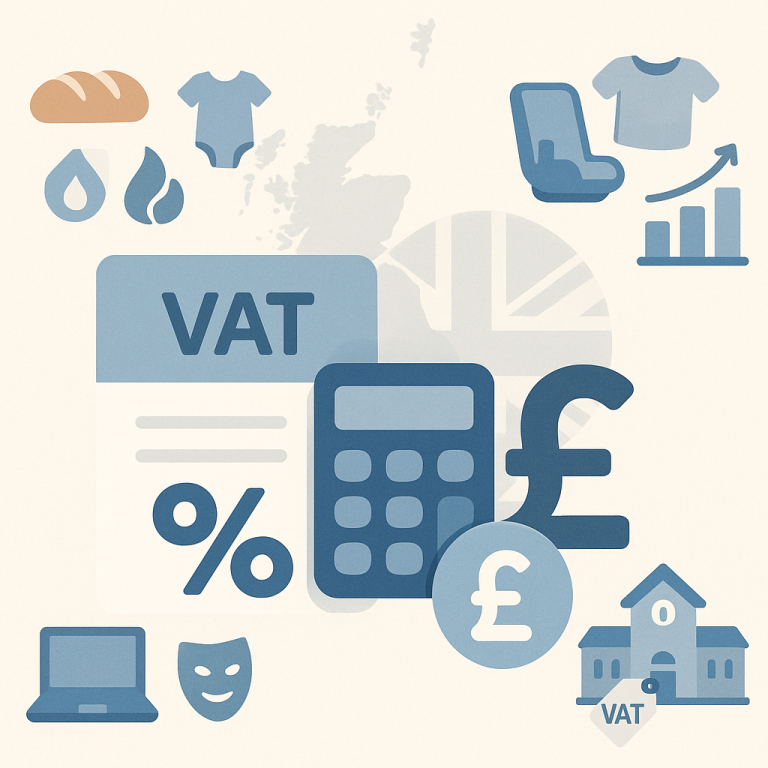
- Reduced Rate: 5% – Applies to specific items such as home energy, children’s car seats, and certain residential property renovations.
- Zero Rate: 0% – Applies to essential goods and services like food, children’s clothing, books, and public transport.
These rates are applicable to both B2B and B2C transactions, unless exemptions apply. It’s critical for your business to assess which VAT category your products or services fall under to ensure accurate VAT accounting and filing.
Key Changes for 2025
VAT on Private School Fees
One of the most significant changes introduced in 2025 is the new VAT treatment of private school fees. These fees are now subject to the standard VAT rate of 20%, whereas previously, such education services were normally exempt.
Businesses and educational institutions in the private education sector must now:
- Register for VAT, if not already registered
- Issue VAT invoices to parents and guardians
- Adapt pricing, budgeting, and contracts to reflect VAT charges
This change affects both the financial planning of schools and the affordability of private education for households. Institutions must also update their accounting systems and communications accordingly to remain compliant.
VAT Registration Threshold Increase
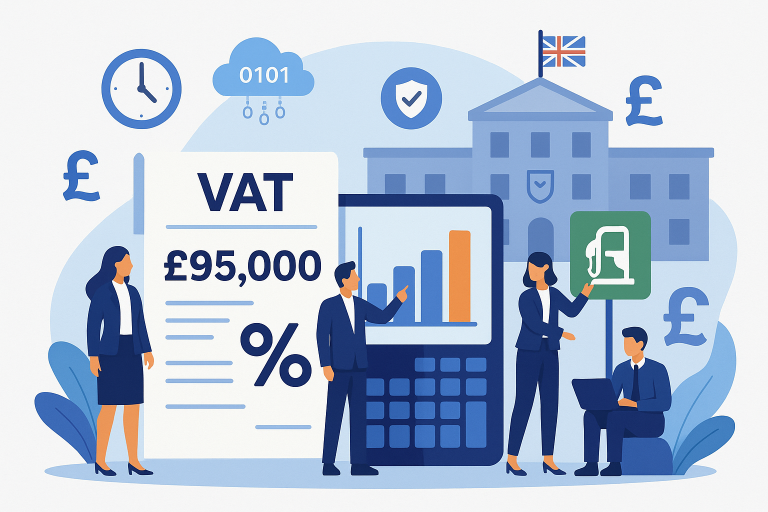
In 2025, the threshold for VAT registration in the UK has been raised to £90,000 in annual taxable turnover, up from £85,000 in previous years.
Implications for small businesses:
- If your turnover exceeds £90,000 in a 12-month rolling period, you must register for VAT within 30 days.
- Voluntary registration is still allowed for businesses below this threshold.
- Remaining under the threshold does not exempt businesses from keeping accurate records of taxable sales for monitoring purposes.
Small businesses should regularly assess their 12-month turnover to ensure timely registration and avoid any penalties for non-compliance.
Goods and Services by VAT Rate
Standard Rated (20%)
- Consumer electronics
- Furniture and household goods
- Entertainment services (cinemas, events)
- Professional services (consulting, accounting)
Reduced Rate (5%)
- Domestic gas and electricity
- Children’s car seats
- Energy-saving materials for certain residential properties
Zero Rated (0%)
- Basic food items (bread, milk, fruits, vegetables)
- Children’s clothing and footwear
- Books and newspapers (physical copies)
- Passenger transport (bus, train, flights within the UK)
VAT-Exempt Goods and Services
Some items are VAT-exempt, which means VAT is not charged and can’t be reclaimed on associated costs. Common examples include:
- Postage stamps
- Financial services
- Insurance
- Some healthcare and medical services
Actionable Steps for Businesses
1. Review Your VAT Categories
Conduct a product/service audit to identify the correct VAT treatment. If recent changes, such as private education or new threshold rules, impact your operations, update your systems and workflows accordingly.
2. Update Invoicing and Pricing
Ensure your sales invoices include correct VAT rates and that your pricing reflects any changes. This is particularly critical for businesses newly entering the VAT system due to the higher threshold.
3. Maintain Accurate Records
All VAT-registered businesses must:
- Keep digital VAT records using software compatible with Making Tax Digital (MTD)
- Submit VAT returns quarterly or annually, depending on your VAT scheme
- Safeguard documentation for at least six years
4. Consider VAT Schemes
Evaluate if special VAT schemes such as the Flat Rate Scheme or Annual Accounting Scheme can simplify your VAT processes or reduce overall VAT liability.
Cross-Border Trading and EU VAT Considerations
If your business trades with the EU, VAT compliance becomes more complex. Key points to remember in 2025:
- Goods imported from the EU into the UK are subject to UK VAT and customs procedures
- UK businesses must understand Import VAT Accounting and possibly register for VAT in EU countries if selling to end-consumers
- Use the OSS (One Stop Shop) scheme for EU digital service sales, if eligible
Ensure you seek local VAT advice if selling goods or services across EU borders to avoid expensive compliance errors.
Compliance Checklist for 2025
- Check VAT Registration: Confirm if your turnover exceeds £90,000.
- Confirm VAT Rates: Classify your goods or services by rate (20%, 5%, 0%, exempt).
- Review Contracts: Especially for affected sectors like private education.
- Update Accounting Software: Ensure compatibility with MTD requirements.
- Train Staff: Educate your finance team about VAT obligations and deadlines.
- Monitor Exports and Imports: Ensure proper VAT treatment for cross-border trade.
Conclusion
Understanding and applying the correct VAT rates can protect your business from compliance risks, unexpected costs, and inefficiencies. With updates such as the £90,000 registration threshold and the taxation of private school fees now in effect, 2025 marks a significant point for reviewing your VAT position. Take the time to assess your products, systems, and reporting processes to ensure accurate and timely VAT compliance throughout the year.
For ongoing support, consultation, or automation tools aligned with UK and EU VAT laws, finance professionals can turn to resources like VATtools.com to manage their obligations efficiently and accurately.