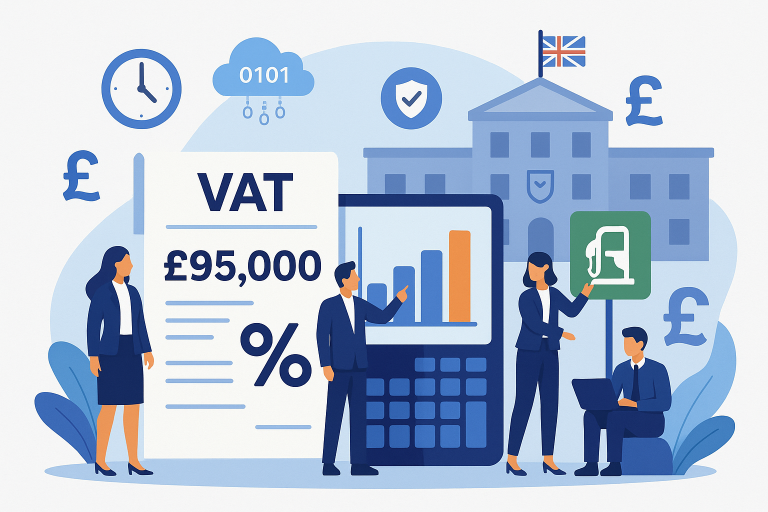
Chancellor Rachel Reeves’ Autumn Budget 2025 has introduced a significant reform to the taxation of investment income, most notably a two percentage point increase in dividend tax rates effective from April 2026. This change affects business owners, directors, and shareholders who earn dividends outside pension schemes or ISAs. While these changes are not directly VAT-related, they create broader implications for tax planning within companies, especially those with owner-managers. This article helps UK business owners and financial professionals understand the implications of the reform with a focus on VAT compliance, cash flow management, and integrated financial planning.
Summary of Dividend Tax Changes from April 2026
Starting from the 2026/27 tax year, the government will raise the dividend tax rates for basic and higher rate taxpayers by 2%. The table below summarises the changes:
| Dividend Tax Band | Current Rate (2025/26) | New Rate (Effective April 2026) |
|---|---|---|
| Basic Rate | 8.75% | 10.75% |
| Higher Rate | 33.75% | 35.75% |
| Additional Rate | 39.35% | 39.35% (unchanged) |
This change is part of a broader policy to address disparity between income earned from work and investment returns. For VAT-registered businesses where directors draw income via dividends, this shift necessitates a reevaluation of remuneration strategies and compliance planning.
Impact on Business Owners and VAT-Registered Companies
1. Reviewing Director Remuneration and Dividends Strategy
Owner-managed limited companies often favour dividends over salaries due to past tax advantages. With higher tax on dividends from April 2026, there may be merit in reconsidering the balance between salary and dividends. Salaries are deductible for corporation tax and include National Insurance Contributions (NIC), while dividends are not. Therefore, comparative tax efficiency must be recalculated in light of these changes, with consideration of:
- Corporation tax rate (currently up to 25%)
- Employer and employee NIC liabilities
- Dividend allowance (£500 as of April 2024 and subject to change)
Engaging with qualified accountants and tax advisors can help realign remuneration strategies in a tax-efficient manner before the rule takes effect.
2. Managing VAT and Cash Flow Together
VAT obligations can impact available cash for dividend distribution. In periods where VAT payments are significant (e.g., just after submitting quarterly returns), cash reserves may be lower. It’s prudent to:
- Map VAT deadlines alongside dividend declaration dates
- Use VAT stagger groups to optimise timing of payments
- Review whether Annual Accounting Scheme or Cash Accounting Scheme might improve liquidity
This becomes increasingly important as net dividends decline under higher tax rates, and businesses seek to preserve post-tax income for shareholders.
3. VAT Considerations in Pension Contributions
One alternative to dividends is increasing employer contributions to pensions, which are tax-relieved and generally exempt from employer NIC. For VAT purposes, pension contributions do not affect VAT claims or recoverability, unless services are provided via employer-financed retirement benefits schemes (EFRBs), which may involve partial VAT restrictions.
For owner-directors considering pension as an alternative wealth extraction method, it is important to maintain proper documentation and ensure the company continues to meet all VAT obligations where applicable. For guidance, refer to HMRC’s VAT Notice 700/12 on keeping VAT records.
Planning and Compliance Checklist
To prepare proactively for the 2026 dividend tax changes, businesses should implement the following action items:
- Assess current remuneration structures with tax advisors to model personal and business tax outcomes.
- Create a tax planning calendar mapping out Corporation Tax, VAT return and payment dates, PAYE obligations, and dividend dates.
- Review accounting periods and dividend timing before April 2026 — earlier dividend payouts may fall within current lower rate bands.
- Invest in digital VAT recordkeeping tools (compliant with Making Tax Digital requirements) to ensure better cash flow prediction and compliance.
- Review alternative income strategies, such as pension contributions, to optimise post-tax returns.
EU Insights: VAT Compliance and Dividends Taxation Developments
Although VAT operates relatively independently from income and dividend taxes, business owners with operations in both the UK and the EU should be aware of international differences. Dividend taxation in EU member states varies considerably — some countries impose withholding taxes, which may be mitigated through double taxation treaties.
From a VAT perspective:
- Remuneration planning should factor in cross-border VAT registration thresholds and the impact of One-Stop Shop (OSS) rules for digital services and goods.
- Ensure that transfer pricing arrangements — especially for dividends and intercompany financing — are aligned with VAT treatment of intra-group services.
Conclusion
The upcoming dividend tax rises underscore the importance of holistic tax planning, especially for SME owners who return profits via dividends. By aligning VAT obligations with new income tax policies, businesses can better manage compliance and optimise financial outcomes. Key actions include revisiting remuneration strategies, strengthening VAT recordkeeping, and assessing alternative income extraction methods in anticipation of the Spring 2026 deadline.
For full information on VAT schemes, see the UK Government’s VAT guidance portal. For personalised advice, consult a qualified VAT or tax advisor.