
 Great Britain now. The Budget says Northern Ireland is expected to get the 0% rate from April 2027.
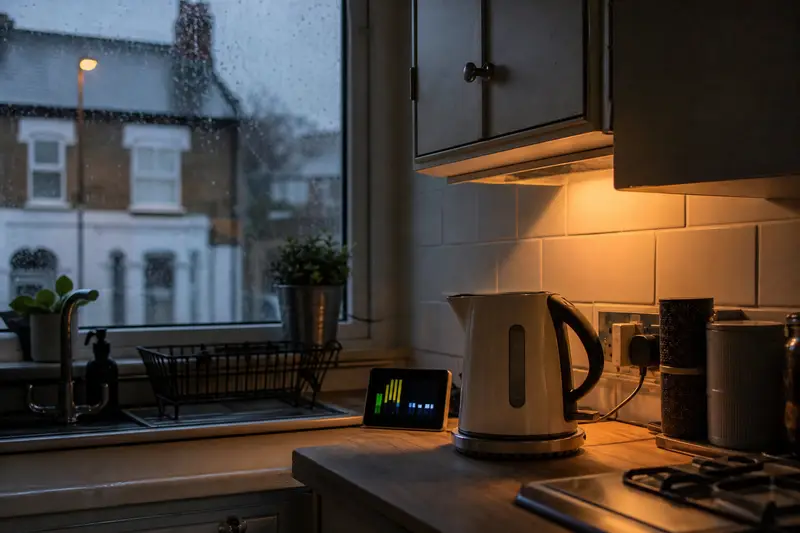
The 0% VAT rate on domestic electricity will now run to 30 June 2027, three months longer than planned. The Chancellor announced the extension in Budget 2026 on 28 October 2026. Before the Budget, the zero rate was due to end on 31 March 2027 and electricity would have gone back to 5%.
This is one of the changes in the Autumn Budget 2026 VAT summary, which lists every VAT measure and its start date.
What changed?
The Budget 2026 document says: "The temporary 0% VAT rate for domestic electricity (six months from 1 October 2026) will be extended for a further three months, to 1 July 2027."
It goes on: "This is expected to apply UK-wide from April 2027." Northern Ireland was left out of the first cut and stays at 5% for now, as HMRC's guidance still says. The Budget says the government is funding the Northern Ireland Executive to give comparable help, and that the extended relief is expected to apply there from April 2027.
| Supply | Before the Budget | After the Budget |
|---|---|---|
| Home electricity in Great Britain | 0% from 1 October 2026 to 31 March 2027 | 0% to 30 June 2027 |
| Home electricity in Northern Ireland | 5% | 5%, with 0% expected from April 2027 |
| Gas, heating oil and other home fuels | 5% | 5% |
The government expects the extension to take around £50 off the annual Ofgem price cap in April 2027.
Who this affects
Anyone paying VAT on electricity at the domestic rate and not reclaiming it.
- Households in England, Scotland and Wales.
- Small business premises whose electricity counts as domestic under the small-supply rule. Our first article on the zero rate explains who qualifies.
- Charities using electricity for non-business activities.
- Sole traders working from home, on their home supply.
- Households and small premises in Northern Ireland, if the expected relief goes ahead from April 2027.
What it means for you
If you are not VAT registered, the VAT on your bill is a straight cost, so you keep the saving. Say a small café that is not registered pays £200 a month for electricity before VAT. That is an example, not a typical bill.
VAT at 5% for one month£200 × 5% = £10
Extra months at 0%, April to June 2027£10 × 3 = £30 saved
Whole zero rate period, October 2026 to June 2027£10 × 9 = £90 saved
If you are VAT registered and use the electricity for your business, you reclaim the VAT as input tax (the VAT you pay on your costs). At 0% there is nothing to reclaim, so your net cost does not change.
What to do now
- Move your diary note. If you planned for 5% from 1 April 2027, change it to 1 July 2027.
- Check your bills after 31 March 2027. Usage in April, May and June 2027 should still show 0% VAT in Great Britain.
- If you are in Northern Ireland, watch for the official detail. The Budget says "expected", so check HMRC guidance before you change prices or budgets.
- If you sell electricity, keep applying 0% to qualifying supplies in Great Britain after 31 March 2027.
The Budget says "to 1 July 2027". HMRC's VAT Notice 701/19, updated on Budget day, gives the exact dates: "The temporary zero rate applies from 1 October 2026 to 30 June 2027." So 30 June 2027 is the last day at 0%. The government will lay the legislation for the extension in early 2027.
Use the VAT calculator to check the VAT on any bill, and our VAT on fuel guide for every fuel rate.
What has not changed
- Gas, heating oil and other home fuels stay at 5%. HMRC says other fuel types are not affected by the zero rate.
- Business electricity above the small-supply limit stays at the standard rate, as set out in VAT Notice 701/19.
- The VAT rates. The Budget kept its commitment of no increase to the headline rate of VAT.
Source
Budget 2026, HM Treasury, 28 October 2026, chapter 7 "Policy Decisions", under "Temporary VAT zero-rate on electricity". The original rules are in HMRC's Revenue and Customs Brief 10 (2026).
Questions
When does 0% VAT on electricity end?
30 June 2027 is the last day at 0%, after the Budget on 28 October 2026 extended it by three months. It was due to end on 31 March 2027.
Does Northern Ireland get 0% VAT on electricity?
Not yet. Northern Ireland stays at 5% for now. The Budget says the extended relief is expected to apply there from April 2027.
Is VAT on gas cut too?
No. Gas, heating oil and other home fuels stay at 5%.
Do VAT-registered businesses save from the extension?
Usually not. If you reclaim VAT on your electricity as input tax, your net cost is the same at 0% as at 5%.


 EU news ·