Is there VAT on food?
Most food for people to eat is zero rated. HMRC's test is whether "the average person, knowing what it is and how it's used, would consider it to be food or drink". Bread, meat, fish, fruit, vegetables, milk, tea, coffee, flour and most groceries carry 0%.
Zero rated is not the same as exempt. If you sell zero rated food you can still register for VAT and reclaim the VAT on your costs, and zero rated sales count towards the £90,000 registration threshold.
Two things flip food to the standard rate of 20%: what the item is, and how you sell it.
Which foods are always standard rated?
Some items are standard rated even when sold cold in a shop. HMRC calls them excepted items.
| Item | Rate | Note |
|---|---|---|
| Sweets, chocolates and other confectionery | 20% | Cakes and flapjacks are zero rated |
| Biscuits covered or partly covered in chocolate | 20% | Plain biscuits are zero rated |
| Sweet cereal bars | 20% | Unless the bar counts as a cake |
| Potato crisps and roasted or salted nuts | 20% | Nuts in their shells are zero rated |
| Ice cream and anything designed to be eaten frozen | 20% | Frozen food you cook or thaw first is zero rated |
| Soft drinks, squash and cordials | 20% | Milk, tea, coffee and cocoa are zero rated |
| Alcoholic drinks | 20% | All drinks containing alcohol |
| Home brewing and wine making kits | 20% | Including ingredients sold for it |
Source: HMRC's VAT Notice 701/14 on food products.
The cake and biscuit line is the classic trap. A cake covered in chocolate is still a cake, and zero rated. A biscuit covered or partly covered in chocolate is standard rated. A plain biscuit is zero rated.
When does food become standard rated because of how you sell it?
Food supplied "in the course of catering" is always standard rated. HMRC's VAT Notice 709/1 on catering and takeaway food sets out three cases.
- Eaten on your premises. Food for consumption on the premises is standard rated. Premises include any area set aside for your customers, such as tables on the pavement outside your café or seating in a shared food court. Benches in a shopping centre that anyone can use do not count.
- Hot takeaway food. Food that is hot when you hand it over, meaning above the air temperature, is standard rated if it was heated so it can be eaten hot, heated to order, kept hot, sold in packaging that keeps it hot, or advertised as hot. Chips, pizzas, kebabs, hot soup and pasties kept under heat lamps are all standard rated.
- Restaurant and café meals. Any meal you serve as a restaurant, café or canteen is standard rated.
Cold takeaway food is zero rated, unless it is an excepted item like crisps or a can of cola. If food has cooled down by the time the customer gets it, and meets none of the hot food tests, it is zero rated too.
Giving customers a microwave to heat their own takeaway makes that food standard rated.
What does this mean for prices?
Shop prices include VAT. To find the VAT inside a standard rated price, divide by 6, because at 20% the VAT is one sixth of the total.
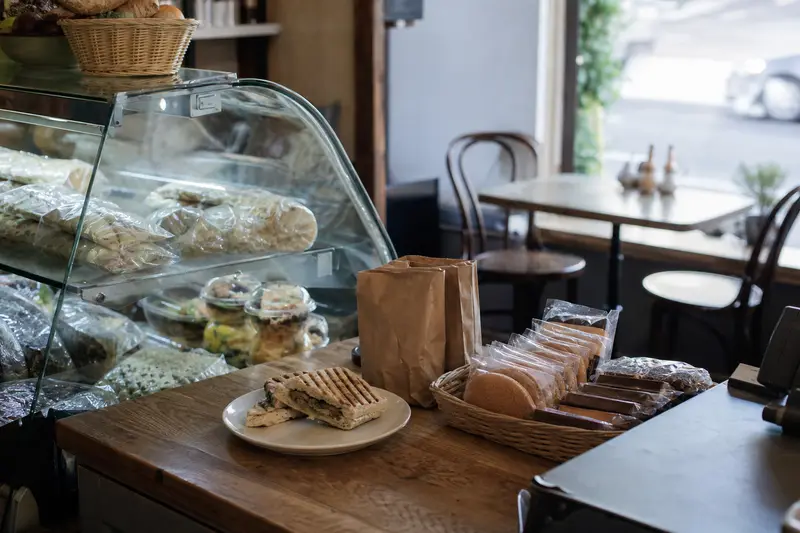
For example, a café sells the same cheese sandwich three ways:
Cold, to take away£4.80 at 0% = £0.00 VAT
Eaten at a table£4.80 ÷ 6 = £0.80 VAT
Toasted, to take away£4.80 ÷ 6 = £0.80 VAT
Same sandwich, same price, but on two of the three sales the café keeps only £4.00. The reverse VAT calculator splits any VAT-inclusive price.
If you sell both ways, you need a way to split your takings. HMRC accepts an apportionment, but you must keep evidence that supports it, such as till records showing eat-in and takeaway sales.
A mixed shopping basket
A corner shop sale with some of each:
Zero ratedbread £1.40 + milk £1.65 + apples £2.00 = £5.05
Standard ratedcrisps £1.20 + cola £1.50 + chocolate bar £1.10 = £3.80
VAT in the standard rated items£3.80 ÷ 6 = £0.63
The shop owes HMRC £0.63 on this sale, not one sixth of the whole £8.85. The VAT calculator works out VAT at any rate, and the profit margin calculator shows your margin once the VAT is taken out.
Questions
Is there VAT on food in supermarkets?
Most supermarket food is zero rated. Sweets, crisps, chocolate biscuits, soft drinks, ice cream and alcohol are standard rated at 20%. Hot food from a supermarket counter, such as a rotisserie chicken kept warm for sale, is standard rated when it meets one of the hot food tests.
Is there VAT on takeaway food?
Cold takeaway food is zero rated. Hot takeaway food is standard rated at 20%, which covers chips, pizza, kebabs, hot soup and anything kept warm for sale.
Is there VAT on cakes?
No. Cakes are zero rated, even if they are covered in chocolate. Biscuits covered or partly covered in chocolate are standard rated.
Is there VAT on restaurant meals?
Yes. Meals served in restaurants, cafés and canteens are standard rated at 20%, along with any food eaten on the premises. Service charges are standard rated too, but voluntary tips are outside the scope of VAT.
Do I charge VAT on food if I am not VAT registered?
No. You only charge VAT once you are registered. Zero rated food sales still count towards the £90,000 threshold, so check with the VAT threshold checker.
Figures in this guide come from our rules file, last checked against HMRC on 22 October 2026.